
Electrical Safety in Older Portland Homes
The 6-point check we do on every visit, and 10 signs your electrical system is struggling.
Portland has beautiful older homes. But, behind the walls? A lot of them are held together with 20 years of electrical band-aids. One electrician did it one way. Another did it another way. Nobody ever stepped back and asked, “Is this whole place actually safe?”
That’s the gap Miracle Electric is here to close.
Our mission: take the average older home in Westbrook and Greater Portland and bring it up to today’s safe standards. One honest visit at a time.
And no, that doesn’t mean a sales pitch. It means you get clarity.
Book a visit (and get the walkthrough)
Schedule your service call, and we’ll include the Miracle Home Safety Walkthrough at no charge, so you know exactly where you stand. Or book a stand-alone 6-Point Safety Check for only $100.
Call Miracle Electric: 207-494-3898
Contact Us
The 10 Signs Your System is Waving a Red Flag
1. Lights flicker or dim when something turns on.
Toaster on. Lights dip. That’s a load problem, a wiring problem, or a connection problem.
2. Outlets or switches feel warm or have a burning smell.
Warm is heat. Heat is trouble. Burning smell spells danger. If you can feel warmth through a cover plate, the issue is already past “minor.” Call your electrician. Now.
3. Smoke detectors sitting on a shelf instead of the ceiling.
They can’t protect you from the kitchen counter. These devices are designed to scream at you to get out when seconds count. Let's get them back on the wall and back to protecting your family.
4. Breakers trip repeatedly.
Breakers trip to protect you. If it’s happening often, the system is telling you it’s overloaded, failing, or incorrectly wired.
5. Buzzing or humming from a wall, outlet, or panel.
Electricity should be silent. Noise means something is loose, arcing, or overheating.
6. Two-prong outlets everywhere.
No ground = less protection. More shock risk. And it’s usually a sign the wiring is older than you think.
7. You feel a shock or tingle when you plug something in.
Your body shouldn’t be part of the electrical path. Treat this as a danger sign, not an odd moment.
8. Aluminum wiring or knob-and-tube.
If you see ceramic knobs in the attic/basement, or you know you’ve got aluminum branch wiring. Don’t touch it. Get it inspected properly.
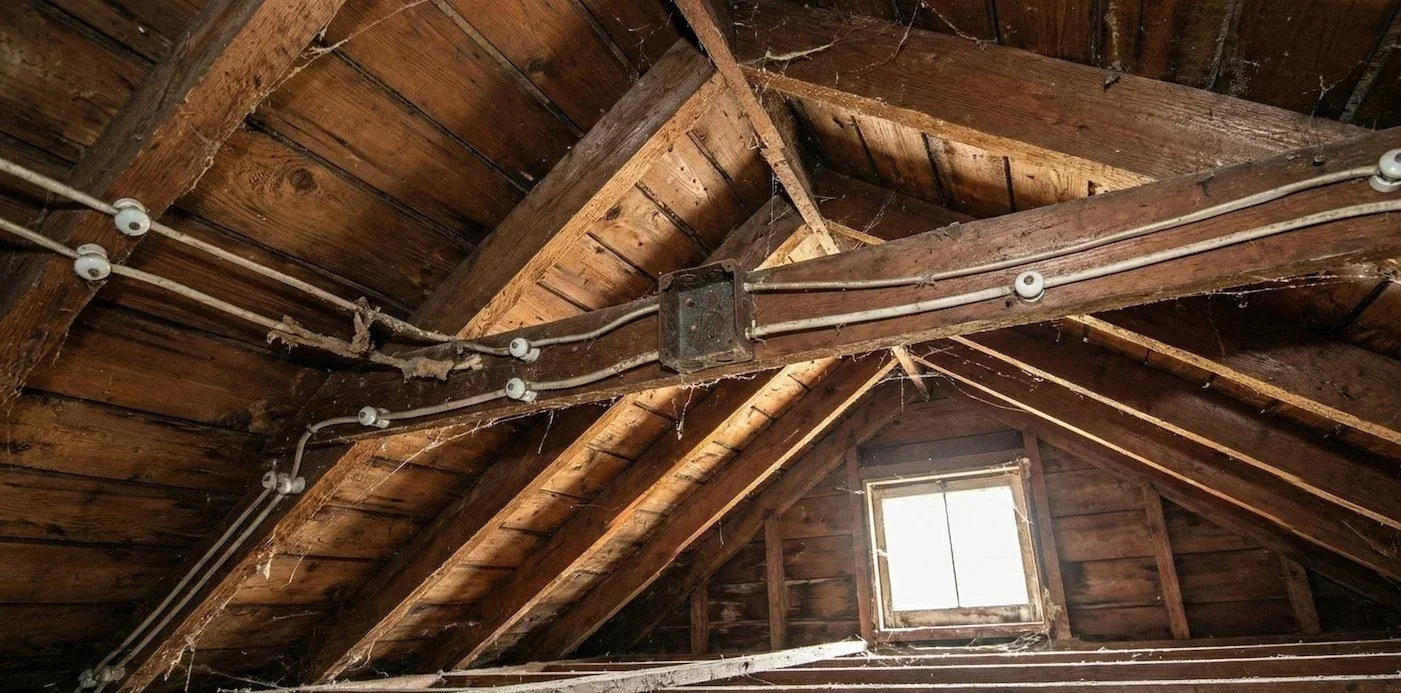
9. The home is 25–40+ years old, and the electrical system has never been updated.
That system wasn’t designed for heat pumps, EV chargers, and a dozen devices charging simultaneously. At some point, the math stops working.
10. Extension cords are doing permanent duty.
Under rugs. Behind furniture. Through doorways. That’s your house telling you it needs more outlets, or more circuits.
Here’s What Makes Miracle Electric Different?
Most electricians show up, fix the thing you called about, and leave.
Our team got worried about “just doing what people asked” while walking through homes that clearly needed more than a quick fix.
So, we made it simple.
Regardless of the reason you call us, we do a basic safety walkthrough on every visit. So you know where your home stands.
Not because we’re hunting for add-ons. Because you need to know the truth.
The Miracle Home Safety Walkthrough
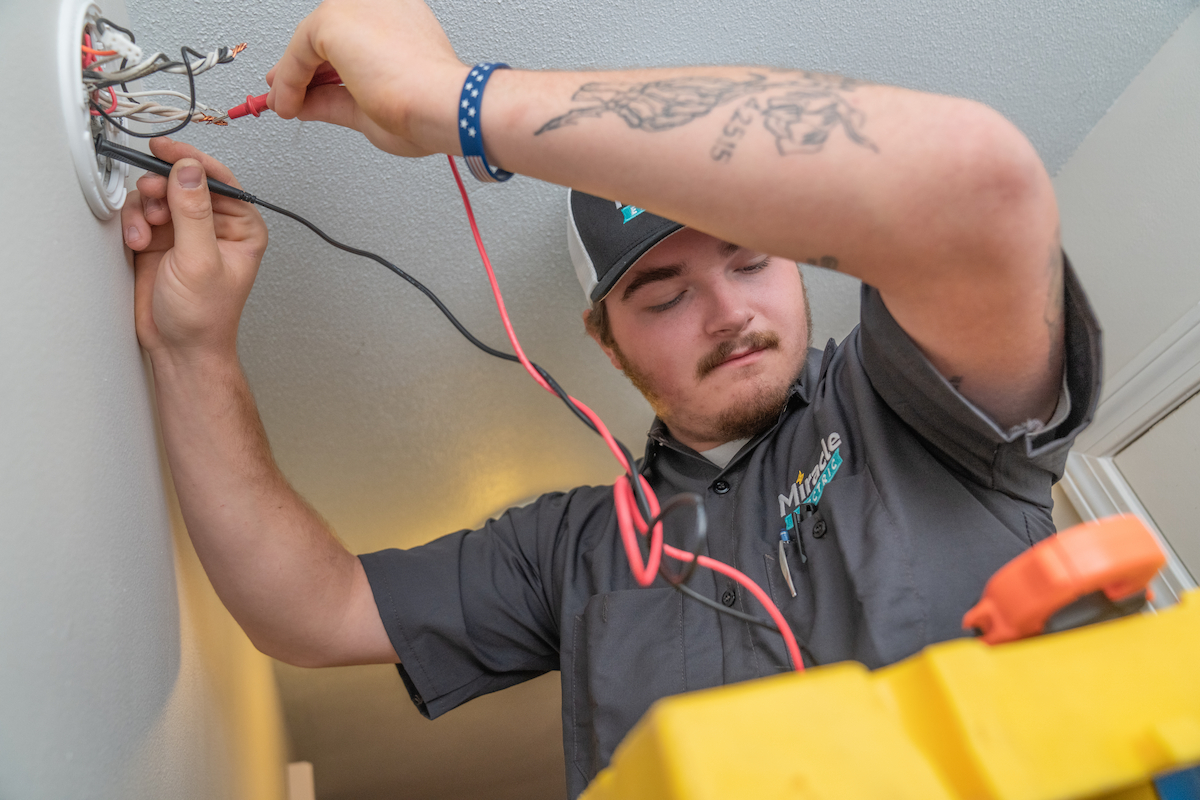
The 6-point check we do on every visit
On every appointment, we check the basics that cause the biggest headaches (and the biggest risks) in older homes:
1. Fire and Life Safety: We check the devices that scream at you to get out. Are your smoke and CO detectors working and placed correctly?
2. GFCI Protection: These are the devices that shut the system off instantly if water is involved. Because water and electricity don’t mix well.
3. AFCI (Arc Fault) Protection: If there is a spark somewhere, these devices shut the circuit off immediately. Standard circuit breakers often wait until the wire is completely melted before tripping. AFCI is faster and safer.
4. Power Intake & Panel: This is the brain of the system. It’s where we go in an emergency to shut circuits off. We check for rust (which causes loose connections) and ensure the main intake is solid.
5. Circuits: These represent the transportation lines from the panel to your outlet. If there are too many outlets on a single transportation line, it overheats, just like a car's brakes trying to stop a heavy trailer.
6. Devices (Outlets & Switches): The things you see and touch every day. We make sure these aren’t worn out and that they are tamper-resistant so kids can’t stick a fork in them.
You’re not obligated to buy anything. You’re getting a clear snapshot of where your home stands and what it would take to bring it up to safe standards.
What We Find in Portland-Area Homes All The Time
These are the “usual suspects” our electricians run into:
Ungrounded wiring
Improper smoke alarm setups
Too many devices on a single branch circuit (hello, flickering lights)
Rust where it shouldn’t be (failed seals, moisture intrusion)
Unlabeled panels
Years of patchwork fixes that don’t add up to a safe system
What you get after the walkthrough
A plain-English explanation of what we found
What’s urgent vs. what can be planned
What it takes to bring the home up to modern, safe standards
No fear. No drama. Just reality.
Book a visit (and get the walkthrough)
If your home is showing even one of the signs above, don’t ignore it.
Schedule your service call, and we’ll include the Miracle Home Safety Walkthrough at no charge, so you know exactly where you stand. Or book a stand-alone 6-Point Safety Check for only $100.
Call Miracle Electric: 207-494-3898